

InnAVET
InnAVET aims to improve Vocational Education and Training (VET) in agriculture in Cameroon, Mali and Burkina Faso, enhancing its relevance to labour market needs, promoting sustainable practices, and creating better job opportunities.
The Project

Project
InnAVET
Full project name
InnAVET - Innovation of African VET in Agriculture
Project number
1011242413
Type of project
Capacity Building in Vocational Education and Training
Programme
Erasmus+
No. 01
A stronger, more attractive VET offer
Improve quality and attractiveness of VET in agriculture
No. 02
Building bridges with the private sector
Strengthen collaboration with stakeholders and private sector
No. 03
Learning by doing, on the ground
Promote work-based learning
No. 04
Skills for a greener agriculture
Develop green and sustainable agricultural skills
No. 05
Empowering those who teach and lead
Enhance capacities of VET teachers and managers
Key activities
Needs analysis with local stakeholders
Participatory activities with VET providers, companies and local actors to identify skills gaps in the agricultural sector and align training with labour market needs.
01
Capacity building (Italy, Spain, Africa)
Training programmes and mobility activities for VET teachers and managers to exchange best practices in pedagogy, entrepreneurship and sustainable agriculture.
02
Development of training modules
Co-creation of specialised training modules focused on green skills, innovation and entrepreneurship to strengthen the competences of trainers.
03
Curriculum adaptation
Revision and update of existing VET curricula to better reflect market demands, sustainability challenges and work-based learning approaches.
04
Pilot alternance scheme (80 learners)
Implementation of a work-based learning model involving 80 learners, combining training in VET centres with practical experience in companies.
05
Creation of Communities of Practice
Establishment of collaborative networks among teachers, institutions and stakeholders to share knowledge, foster innovation and ensure long-term sustainability.
06
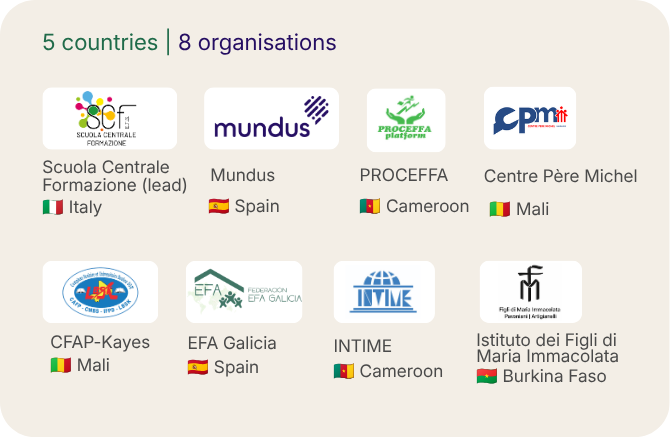
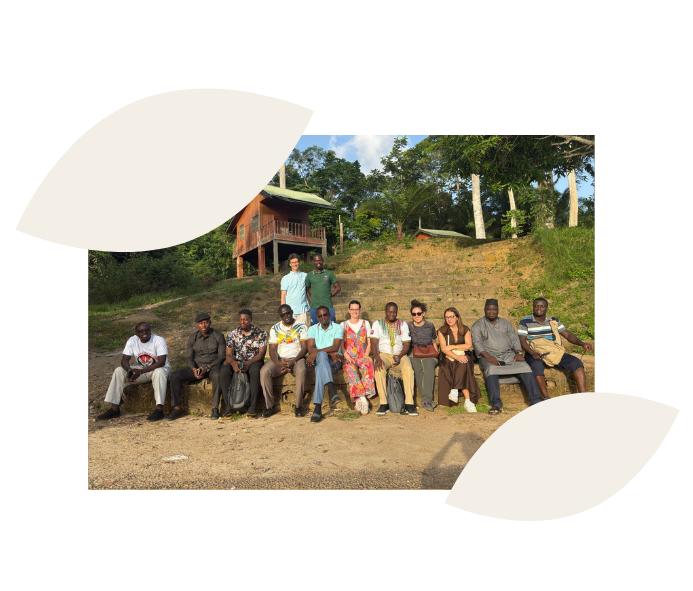
Partners

Funded by the European Union. Views and opinions expressed are however those of the author(s) only and do not necessarily reflect those of the European Union or the European Education and Culture Executive Agency (EACEA). Neither the European Union nor EACEA can be held responsible for them.
